 Photo from Unsplash
Originally Posted On: https://xcellaser.com/2024/08/05/how-does-laser-welding-work/
Laser welding is a sophisticated technique that has revolutionized the way industries approach the joining of materials. As a leading provider of advanced manufacturing solutions, XCEL Laser integrates this technology to enhance the precision and efficiency of production processes. So, how does laser welding work? Let us explore the fundamental concepts of laser welding, highlighting how it operates and why it is increasingly favored in high-tech industries.
The Fundamentals of Laser Welding
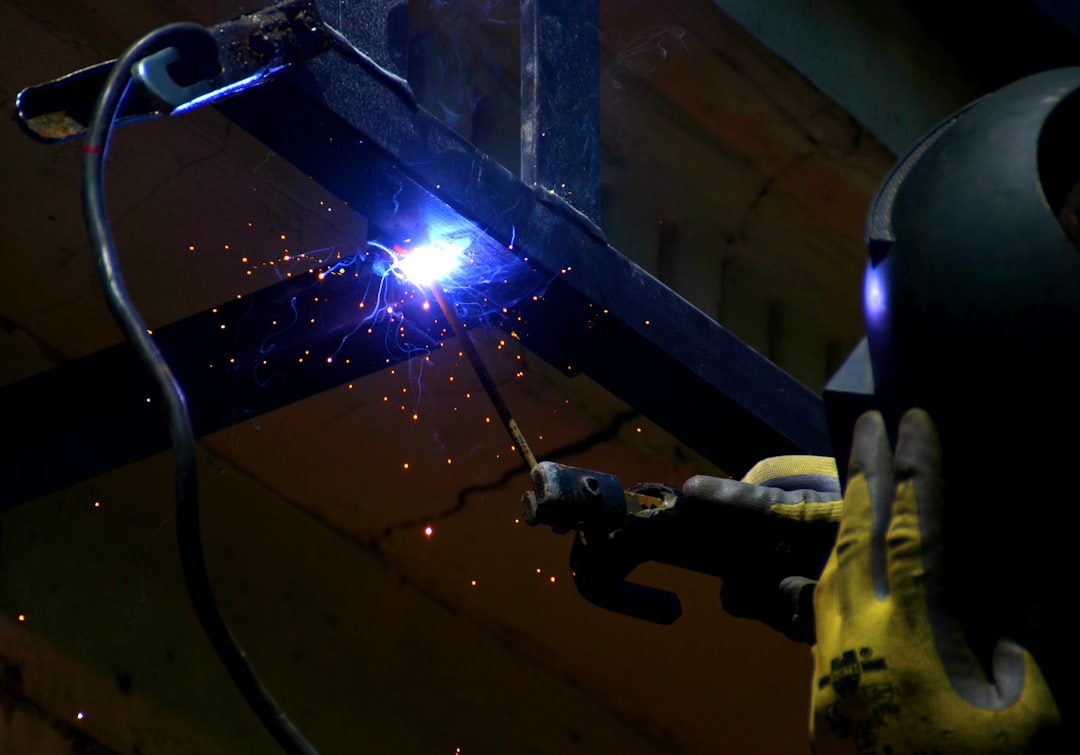
At its core, laser welding uses a highly concentrated laser beam to fuse materials together. This process involves directing a laser beam at a small point on the workpiece. The intense energy of the laser heats the material, causing it to melt and form a weld pool. This molten pool then cools and solidifies to create a strong, durable weld.
Laser welding is distinct from traditional welding because it can be highly precise, providing significant control over the heat applied to the material. This precision minimizes damage or alteration to the surrounding area, making it ideal for delicate or highly detailed work. Moreover, the process is versatile, capable of joining a variety of materials including metals, plastics, and composites.
How Does Laser Welding Work?
Understanding how laser welding works requires a look into its two primary modes: conduction limited welding and keyhole welding. These modes describe how the laser interacts with the material being welded, affecting the efficiency and quality of the weld.
- Conduction Limited Welding
In conduction-limited welding, the laser beam heats the surface of the material until it melts, but the heat is not intense enough to penetrate deeply. The power density of the laser in this mode is typically less than 10^5 watts per square centimeter. As a result, the welds formed are wider and shallower, characterized by a high width-to-depth ratio. This mode is suitable for welding thinner materials or when deep penetration is not necessary.
- Keyhole Welding
As the laser moves along the joint, the keyhole also traverses, allowing the molten walls of the keyhole to flow and solidify behind it, forming a weld that is significantly deeper than it is wide. This results in a joint with a high depth-to-width ratio, ideal for thick or heavy-duty components.
XCEL Laser’s Application of Laser Welding
At XCEL Laser, our expertise extends beyond supplying laser welding machines. We are daily users of the technologies we advocate, applying laser welding in the manufacturing processes of our parent company, MFR Manufacturing Corp. This hands-on experience ensures that the equipment we provide is not only advanced but also rigorously tested and proven in real-world manufacturing settings.
Our approach to laser welding focuses on optimizing production efficiency while ensuring the highest standards of quality. By integrating laser welding technologies into our processes, we have been able to achieve faster production times, reduce material waste, and enhance the overall quality of the final products. Whether for laser cutting intricate designs or implementing laser cleaning for maintenance, laser technology offers comprehensive solutions that go beyond traditional methods.